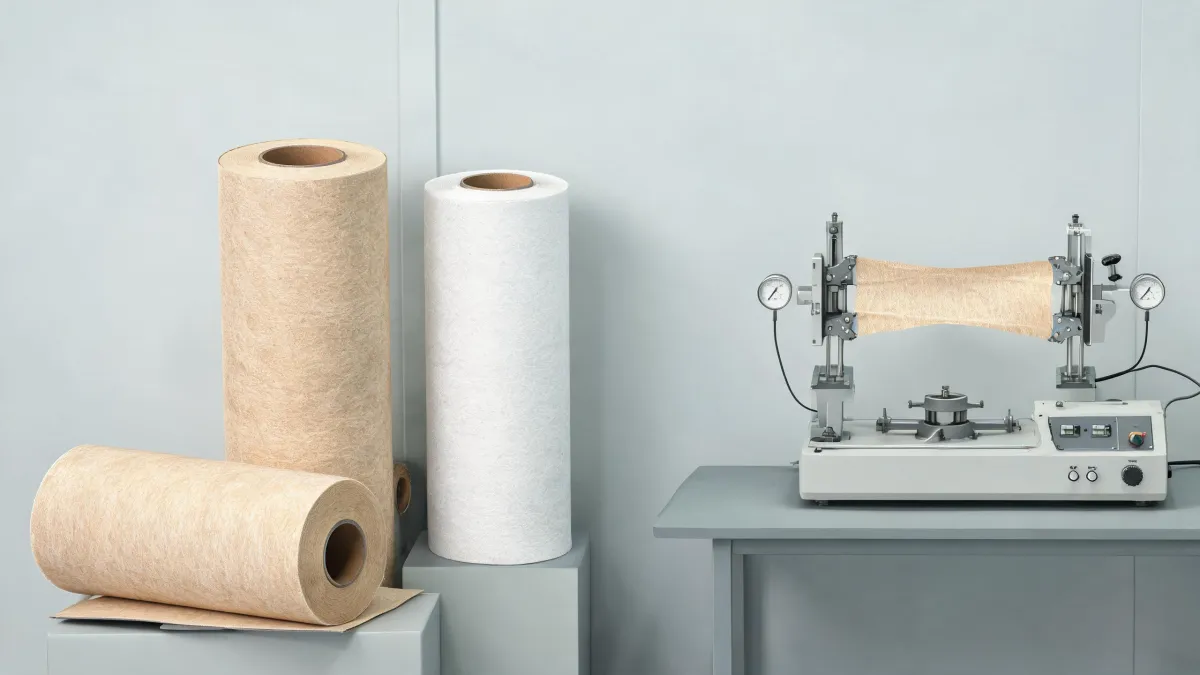
In the third week of August 2022, I watched our QC supervisor pull 17 sample pads from a sealed box and measure each one with a digital micrometer. Seventeen pads. Six different thickness readings. The box was labeled 'sample pad, equivalent to Ahlstrom 222'. The material inside was not consistent enough for the lateral flow tests we were running. That was the day I stopped trusting quotes and started asking better questions.
I'm an operations manager handling material sourcing for a small in-vitro diagnostics manufacturer. I've been doing this for eight years. I've personally made, and documented, 11 significant mistakes totaling roughly $15,000 in wasted budget. This one was the third. If you are searching for 'Ahlstrom paper' or 'Ahlstrom 222 sample pad thickness', you are probably in the same spot I was in 2022: comparing technical datasheets, trying to figure out whether a cheaper supplier can deliver the same performance. Here's what I learned the hard way.
The day the numbers didn't match
We make lateral flow test components, not the final tests, but material consistency matters just as much. For sample pads, we had been using Ahlstrom 222 for years. It's not just 'paper'. Ahlstrom 222 is a fiber-based nonwoven engineered for predictable wicking. The datasheet lists a nominal thickness of 0.35 mm, but in our incoming inspections, actual measurements ranged from 0.34 to 0.38 mm. That consistency was a luxury I took for granted.
In early 2022, another non woven fabric manufacturer offered us an SMS nonwoven private label option at 18% less than our current material. For our planned 50,000-unit order, that savings looked like $2,100. My spreadsheet said 'approved'.
For those not familiar, SMS stands for spunbond-meltblown-spunbond. It's used in medical gowns, drapes, and kit packaging. We use a small amount for the outer wrap of our components. The quote looked standard: same basis weight claims, same thickness range, same 'medical grade' language.
What happened when the bulk delivery arrived
The sample swatches from the new supplier passed our quick checks. The bulk delivery didn't. We measured the Ahlstrom 222-equivalent sample pad first. The first roll was okay. The second roll had a 0.08 mm thickness difference across the width. That doesn't sound like much, until you realize the wicking rate changes, the test line shifts, and the whole run has to be rejected.
When I compared our qualified Ahlstrom 222 pads and the private-label alternative side by side, I finally understood why the details matter so much. Under magnification, the fiber distribution looked almost the same. But the calibration data told a different story: the density varied more, the capillary rise time was inconsistent, and the thickness tolerance was wider.
The most frustrating part of this whole mess: the cheaper material looked identical until you measured it. You'd think written specifications would prevent these surprises, but interpretation varies wildly. One supplier's '0.35 mm' means nominal. Another's means minimum. Neither is wrong until your test line is in the wrong place.
We did what many small shops do: we used the cheap material, re-ran the quality checks, and hoped. We got lucky? No, we didn't. We wasted 30,000 sample pads and 14,200 SMS wraps before we stopped the line. The labor, the re-qualification, the express delivery of proper material, the apology to our own customer, it added up to $4,700. The original $2,100 savings vanished. The total cost was more than double the saving.
The question isn't 'How much does this nonwoven cost?' The question is 'How much does it cost when it fails?'
A practical medical nonwoven wholesale cost guide
People ask for a medical nonwoven wholesale cost guide and want a number. I get it. But the honest answer is 'it depends'. What I can give you is the questions we use to turn a quote into a real cost.
- What is the cost per square meter, not per roll?
- What thickness tolerance is printed on the certificate of analysis?
- Can the non woven fabric manufacturer guarantee lot-to-lot consistency for private-label SMS?
- What is their acceptable quality limit for basis weight, thickness, and wicking?
- What happens if the incoming inspection fails?
In my experience managing 'surviving' multiple sourcing projects, the lowest quote has cost us more in 60% of cases. That's not a scientific study. That's my own spreadsheet. But the pattern is familiar to anyone who has dealt with lot failures.
SMS nonwoven private label: same lesson, different material
If you're buying SMS nonwoven private label for medical use, the same logic applies. A cheaper roll can look fine at the slitting stage. Then it jams on the converting line because the coefficient of friction changed. Or the meltblown layer has pinholes that only show up under light after you've printed your logo.
I'm not saying private label is bad. We use private-label SMS for non-sterile applications. But the qualification process has to be as strict as your final product requirement. That means checking the fabric's thickness, basis weight, air permeability, and fluid resistance before you commit to a wholesale order.
Per FTC business guidance (ftc.gov), claims like 'medical grade' have to be substantiated. That doesn't mean the supplier is lying. It means you need to ask for test reports before your purchase order, not after your quality alert.
The 'Ahlstrom paper' question
One more note for anyone searching 'Ahlstrom paper': Ahlstrom 222 is often called a paper pad because it is a fiber-based material, but it's really an engineered nonwoven. The right thickness depends on your sample type, flow rate, and conjugate. If a quote lists 'Ahlstrom 222 sample pad thickness' as a single number, ask for the full datasheet and the actual lot certificate. The paper number is a starting point, not a guarantee.
The checklist that finally stopped the bleeding
After the third rejection in Q1 2024, I created our pre-check list. It's not clever. It's boring. But we've caught 47 potential issues using it in the past 18 months. Here's the core of it:
- Request qualification samples from the actual production line, not the lab shelf.
- Measure thickness on at least 10 points across the width.
- Compare the certificate of analysis to the datasheet for the same lot.
- Run a small pilot batch under the same conditions as routine production.
- Calculate the total cost per usable unit, not the cost per roll.
Notice what's missing? The unit price. We get to that last, after the material has proven it works.
The bottom line
We still use Ahlstrom 222 for sample pads. We also still buy private-label SMS nonwoven from a non woven fabric manufacturer, just a different one than the 2022 quote. The difference is that we now qualify the factory, not the salesperson. If you're building a medical nonwoven wholesale cost guide for your own company, start with the failures. They're expensive, but they teach.
If I could send my 2022 self a message, it would be this: 'The money you save on a cheap quote will be spent on something later. It's just a matter of whether you spend it on rework or on certainty.'